
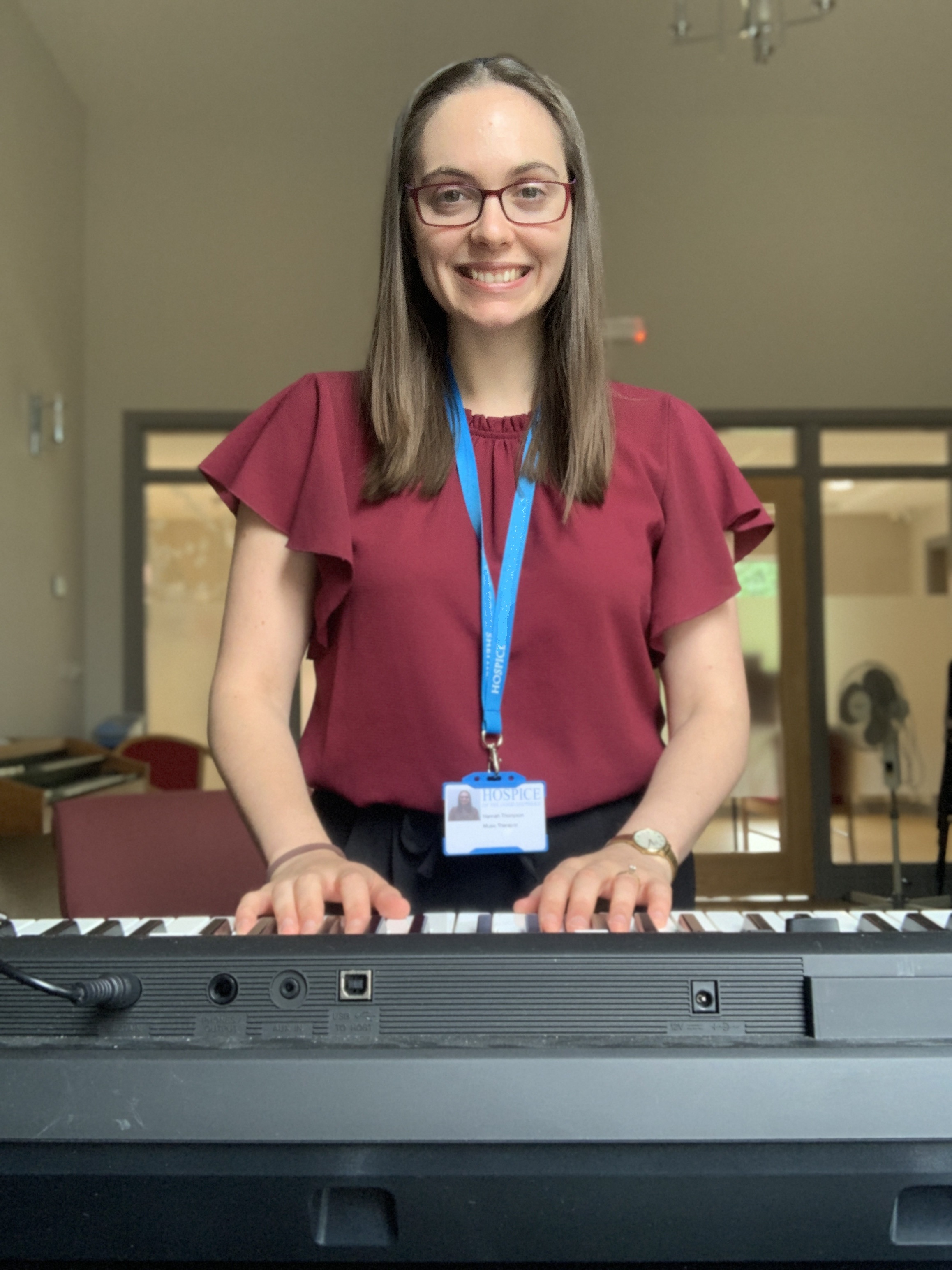
I was told that I was born talking and very soon after, singing! Music has always been a big part of my life, from singing at church at an early age to joining school choirs and having music lessons on different instruments across my school years. When I was considering what to study at
university, I wanted to find a way to combine my passion for music with my desire to help people and connect with them. When I discovered music therapy as a potential career path it led me on a journey to gaining the experience and skills needed to one day begin the training.
I studied BA Music at University of Leeds where I learnt a lot about music psychology. In my spare time I gained as much experience volunteering with music as possible, including in care homes, hospices, adult learning disability day centres, etc. My undergraduate course included a Year in Industry and I spent this as a music intern at Nordoff and Robbins, the UK’s largest music therapy charity and provider. Once I graduated from the BA, I wanted to continue getting more experience in settings where I might work as a music therapist in the future. I spent 18 months as a teaching assistant in a special needs school for children with profound and multiple learning disabilities before moving onto the role of a physiotherapy assistant in a rehabilitation community hospital. I then received the wonderful news that I had been accepted onto the Nordoff Robbins Master of Music Therapy (MMT) course which led to 2 years of intense learning, both personally and musically. I qualified as a music therapist in the summer of 2023.
I currently work for MusicPlace North-West in a specialist palliative care hospice working mainly with adults with life-limiting illnesses. For a different organization I also work in an autism specialist school, a care centre for adults with mental health illness/brain injuries/dementia, and another hospice. In my work I seek to connect with clients in a musical relationship, meeting them in whatever way they are presenting on the given day. From there I can consider goals or aims that might be useful for that person, whilst always wanting to celebrate their musical identity.
Music is such a powerful tool in helping people with self-expression, exploring instruments both familiar and new alongside using their voice, in a way that can extend beyond barriers they may have such as an illness, life circumstance or disability. I like to consider myself as a musical companion, using music to draw besides someone and remind them of their identity and dignity. It is a joy and privilege every day and I am grateful to everyone who has been on a musical journey with me.

 MusicPlace North-West